Above-grade wall waterproofing for homes and commercial facades
When water stains show up around an interior window head or along a second-floor baseboard after a wind-driven storm, the roof often gets blamed for what is actually a wall transition leak. At 518 Siding Pros, our waterproofing scope focuses strictly on above-grade exterior walls—not interior basement drains or sump systems. Operating as part of The Dom Construction Group LLC across Albany, Colonie, Latham, Clifton Park, Schenectady, Troy, East Greenbush, Delmar, and Saratoga Springs, our own crews seal and protect the building envelope where siding, brick, stone veneer, stucco, EIFS, and aluminum panels meet windows, rooflines, and trim.
No cladding surface stays completely watertight on its own; vinyl lap joints, fiber cement butts, brick mortar joints, and panel reveals all see wind-driven moisture. What keeps sheathing and studs dry is a continuous drainage plane and gravity-lapped metal flashing behind the outer skin. Smearing fresh caulk over brittle old caulk—or bonding sealant to the back of a deep joint without a backer rod—causes the bead to tear apart the first winter the wall contracts. Whenever we open a leaking wall section or perform siding repair, we correct the hidden drainage errors that let water move inward:
- installing continuous housewrap or air and water barrier membranes lapped shingle-fashion so downward water never catches a reverse seam
- forming sloped sill pans and self-adhered jamb/head flashings around replacement windows and exterior doors
- adding hemmed metal drip caps above horizontal belly bands, stone wainscot ledges, and window casings—such as the EIFS band repair with a new drip cap our crew completed on a home in Schenectady in 2026
- fitting kick-out diverter flashings where roof edges terminate into taller side walls
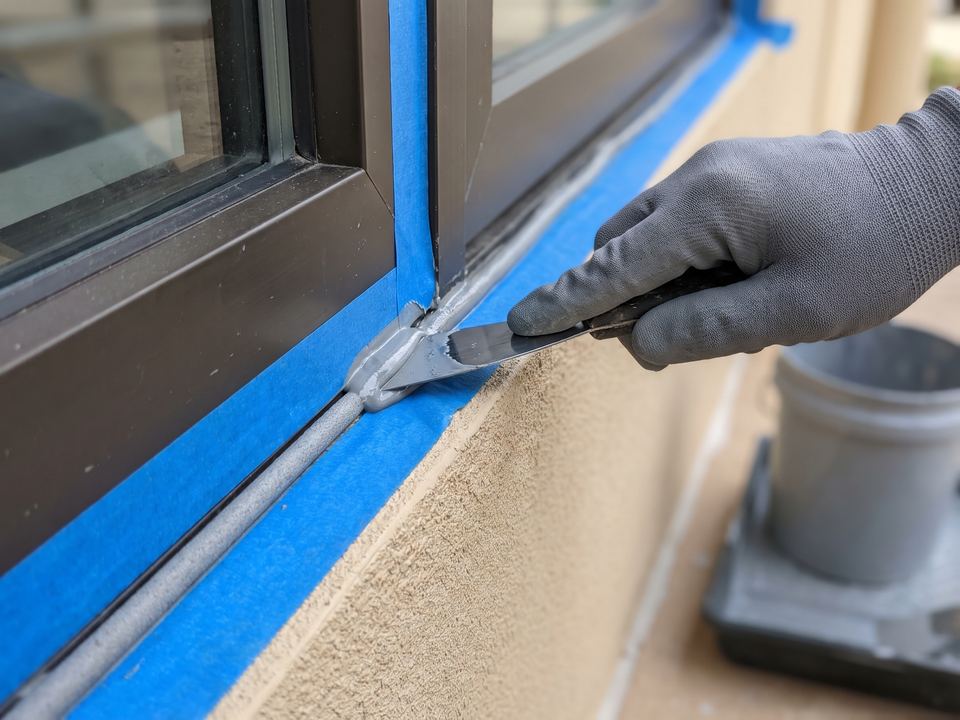
- replacing split perimeter caulk with properly sized backer rod and tooled exterior sealant at control joints, storefront frames, and dissimilar cladding transitions
Breathable exterior wall coatings vs. moisture-trapping paint
Porous masonry, cement stucco, and weathered synthetic stucco absorb driving rain through hairline crazing and sun-chalked surfaces, yet they also need to release interior water vapor during Capital Region winters. Rolling thick, vapor-tight paint over damp brick or stucco traps moisture right behind the film until frost pushes it off in sheets. Our field team—with about 19 years of experience in EIFS, stucco, masonry, and coatings—prepares chalky or hairline-cracked walls properly, repairs open mortar or lamina defects first, and applies breathable architectural coatings engineered to shed liquid rain while letting vapor pass outward.
Planning joint replacement and coating work around 518 weather
Small window-perimeter recaulking or isolated flashing fixes often run from a few hundred to a couple of thousand dollars, while full commercial control-joint replacement or whole-elevation coating scales with linear footage and wall height. Because we own supported pipe and frame scaffold and rent boom lifts when needed, we reach multi-story storefronts, condo facades, and steep residential gables safely. Coatings and water-based barrier materials require about 40 °F and rising with 24 hours free of freezing, while metal flashing repairs, sealant evaluation, and free estimates from texted wall photos run year-round at (518) 888-7938.