Synthetic stucco repairs and drainage EIFS in the Capital Region
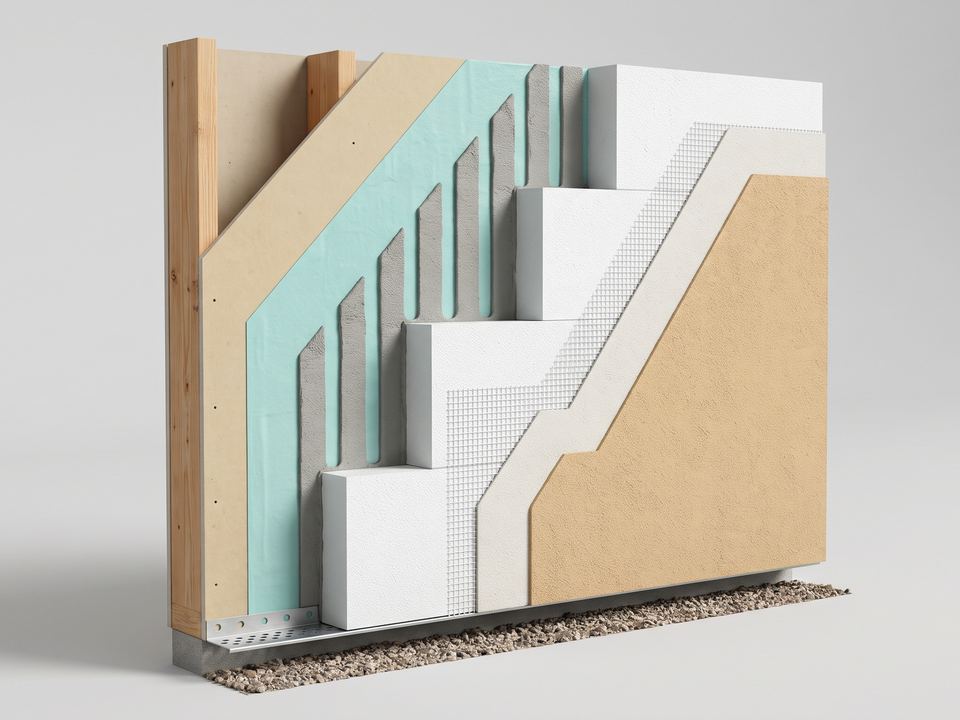
Exterior Insulation and Finish Systems—often called Dryvit or Sto after common system brands—combine expanded polystyrene foam board, polymer-modified base coat with embedded fiberglass mesh, and an acrylic textured finish. Done over a dry substrate with proper drainage and flashing, EIFS insulates well and holds crisp architectural lines on both houses and commercial storefronts. When water slips behind the foam, however, trapped moisture softens sheathing before the outer finish ever falls off. At 518 Siding Pros, our crews from The Dom Construction Group LLC bring about 19 years of field experience repairing, recoating, and installing EIFS across Clifton Park, Schenectady, Latham, Colonie, Niskayuna, Saratoga Springs, and surrounding 518 communities.
Fixing sheathing and transitions where EIFS meets siding or brick
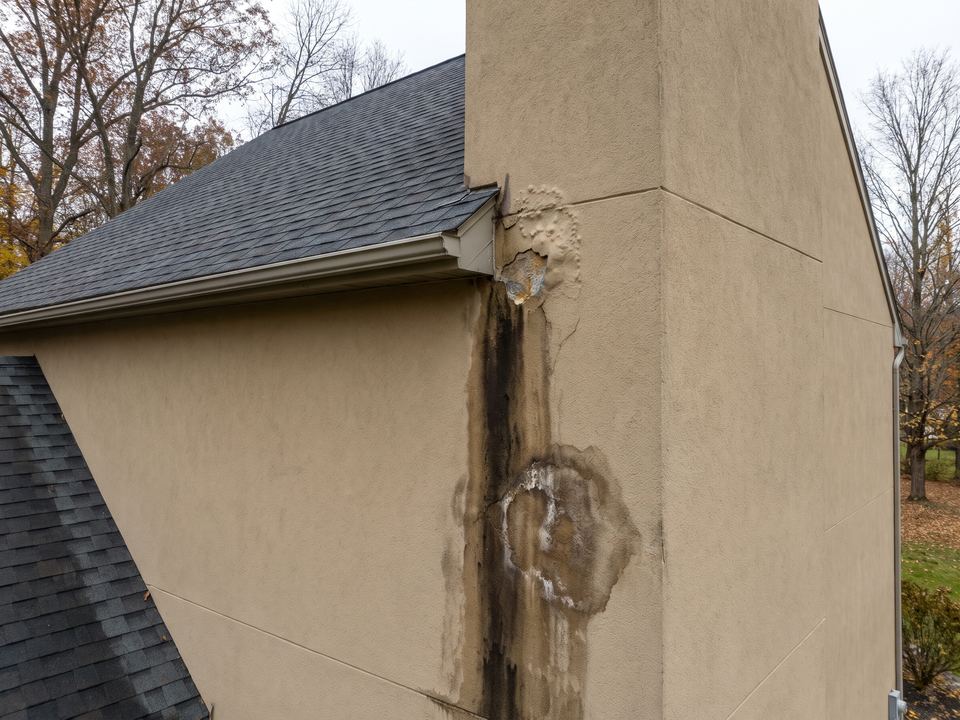
Many Capital Region homes use EIFS solely on front gables, window surrounds, or decorative belly bands paired with vinyl or fiber cement siding on the remaining walls. Those mixed-cladding joints are prime leak points when original builders butted foam tight against window frames or skipped metal flashing above horizontal bands. Whenever we open damaged EIFS, we fix the wall assembly behind it first:
- cutting back wet foam and replacing rotted wood or delaminated gypsum sheathing
- tying into or applying a continuous air and water barrier so moisture cannot reach framing
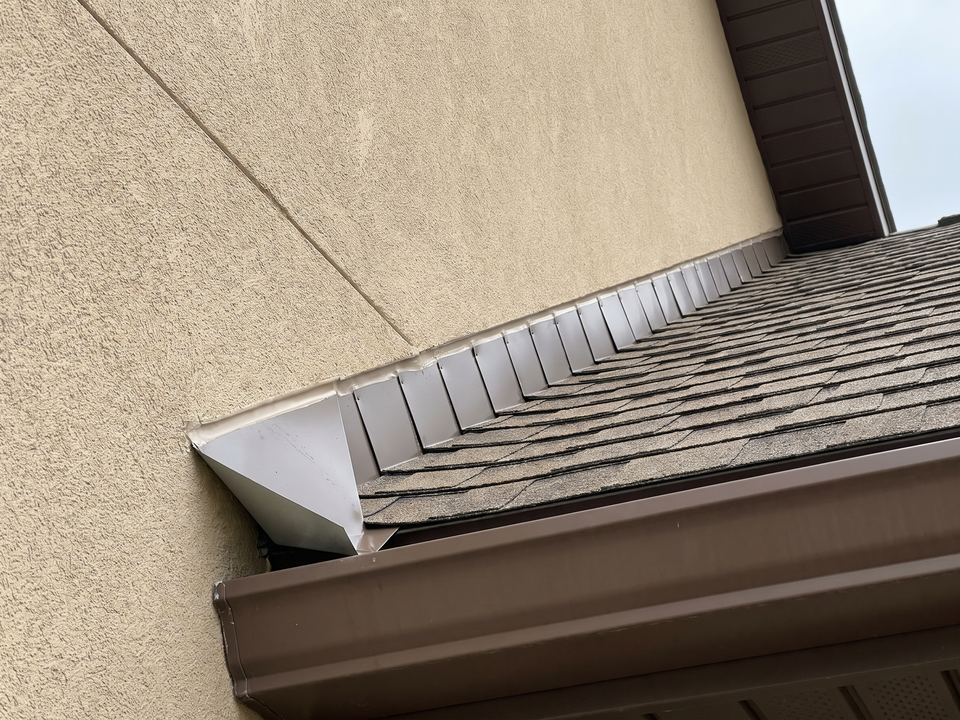
- adding sloped metal drip caps above horizontal trim bands and kick-out flashing at roof eaves
- leaving a true perimeter gap around windows, doors, and siding transitions for backer rod and sealant rather than smearing finish coat hard against frames
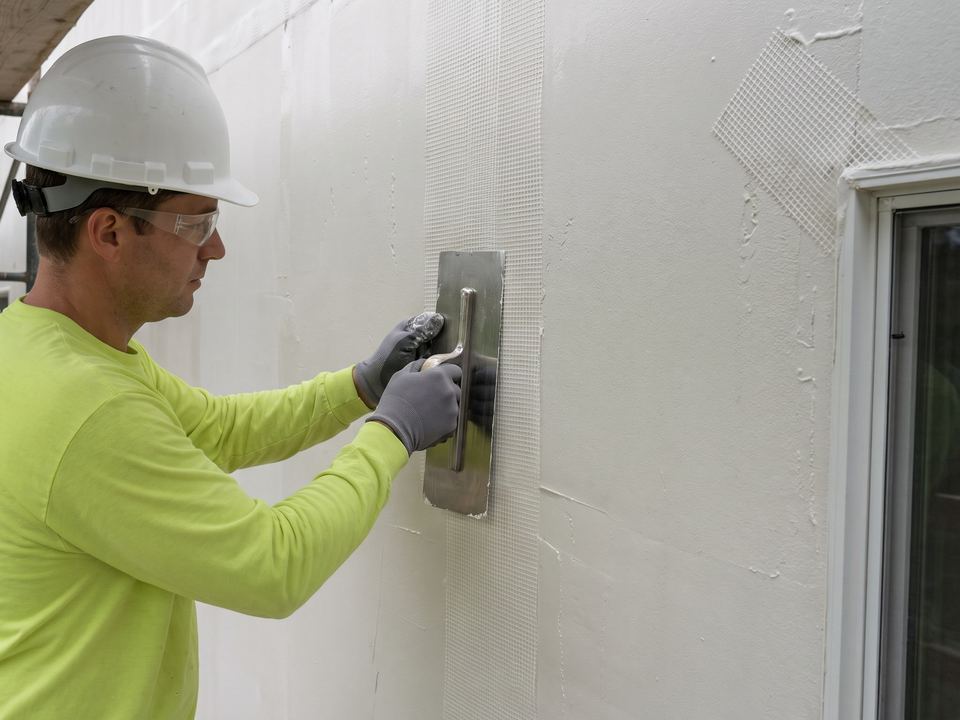
- embedding alkali-resistant fiberglass mesh cleanly into fresh base coat, including diagonal stress patches at window and door corners
Choosing between section patches, full recoating, and re-cladding
Not every stained or cracked foam wall needs to be torn off. When moisture is confined to a missing kick-out or a few woodpecker holes, localized cutouts and lamina repairs solve the problem cleanly. If sun-faded acrylic finish is fifteen or twenty years old, a small patch will stay noticeable, so we often price blending from architectural corner to corner or recoating the full elevation with fresh textured finish or breathable exterior wall coatings. Where an older barrier-style EIFS house has widespread wet sheathing, we lay out clear options side by side: installing a new drainage EIFS assembly with vertical moisture channels and starter track, or stripping the failed foam and completing a full siding replacement over housewrap and flashed trim. If the extent of hidden moisture is unclear, we can start with a paid EIFS inspection whose fee credits in full toward your repair contract.
Recent Capital Region EIFS projects and repair ranges
Our own crews handle residential bands and public or commercial facades alike, registered on the New York State public work contractor registry. Recent work includes an EIFS band repair with a new metal drip cap at a home in Schenectady (2026), the EIFS feature panel finish at the Shake Shack in Clifton Park (2026), a prefabricated EIFS panel band on State Street in Schenectady set from a boom lift (2026), the EIFS canopy refinish at Casey Stadium at the University at Albany (2026, public contract), and a new EIFS envelope on a steel-framed house in the Catskills (fall 2025). Minor hole and crack repairs often run from a few hundred to a couple of thousand dollars, while moisture cutouts depend on sheathing condition and wall access. Base coats and acrylic finishes require about 40 °F and rising with no freezing for 24 hours, generally spring through late fall, while estimates run year-round.