Siding repair · 518 Area
Siding repair across Albany and the Capital Region
Wind-torn vinyl, cracked fiber cement boards, woodpecker damage and soft spots below windows usually do not require re-siding the whole building, as long as the leak behind the damaged area is fixed at the same time.
Call or text (518) 888-7938
Book spring work now. Winter assessments and estimates available.
Updated November 2026
Short answer
Most storm-damaged, loose or rotted siding in the Capital Region can be repaired by opening only the affected section. We unhook or remove the damaged courses, replace soft wall sheathing, install proper housewrap laps and metal flashing, and weave in matching vinyl or fiber cement siding. Estimates are free. Text a close-up photo and a whole-wall shot to start.
Key facts
- Service area
- Albany, Colonie, Latham, Clifton Park, Saratoga Springs, Schenectady, Niskayuna, Troy, East Greenbush and Delmar.
- Season
- EIFS and stucco finishes need about 40 °F and rising, with no freezing for 24 hours. In the Capital Region that means spring through late fall.
- Who does the work
- Our own crews, from The Dom Construction Group LLC.
- Insurance
- General liability, umbrella and workers' compensation insurance; certificates on request.
- Estimates
- Free. Start with 3–5 photos by text, or use the form.
- Reply
- We reply within one business day, Monday to Friday.
Siding damage we repair across the 518
Most homeowners call us after a windstorm pulls a few vinyl panels loose on a high gable or after spotting dark stains and buckled boards below a window. Once we get a ladder on the elevation, the visible break usually points to how the panel was fastened or where water is entering from above. Typical repair scopes include:
- wind-loosened, cracked or missing vinyl courses on gables, corners and two-story walls
- warped or buckled vinyl panels nailed too tightly without room for summer expansion
- cracked, delaminating or butt-gapped fiber cement lap boards and shakes
- woodpecker holes, mower strikes, grill heat warping and storm-branch impacts
- soft, spongy OSB or plywood sheathing behind deck ledgers, porch roofs and bay windows
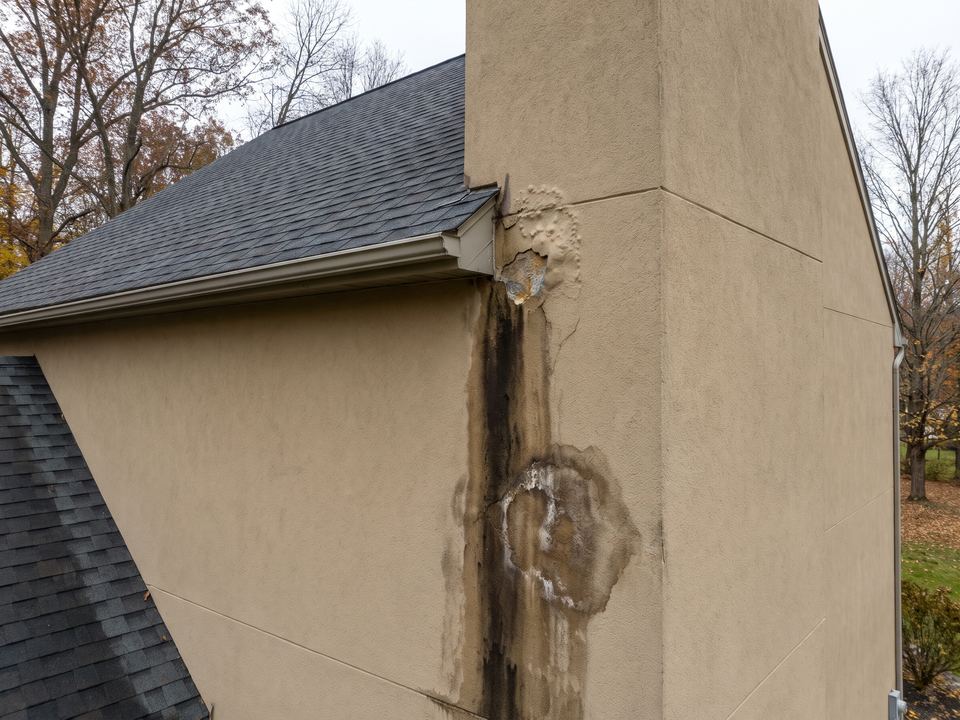
- leaks where siding meets brick chimneys, stone veneer water tables or EIFS front facades
Unzipping the wall to check sheathing and flashing
Putting a new piece of siding over wet sheathing only hides rot for another winter. On vinyl walls, our crew uses a zip tool to unhook the courses above and beside the damaged zone without snapping brittle locks. On fiber cement walls, we pull or cut fasteners cleanly and slide out the broken planks.
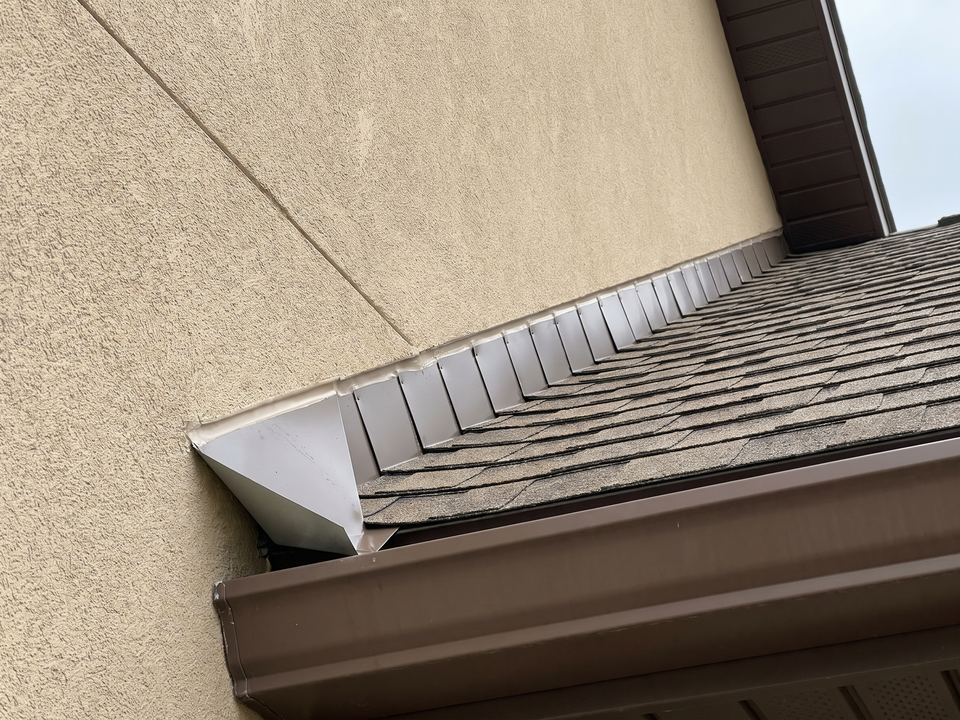
With the cladding open, we probe the plywood or OSB sheathing, sill plates and rim joists. Dry wood stays in place; soft or blackened sheathing gets cut back to solid framing and replaced flush. Before any siding goes back up, we rebuild the drainage path: shingle-lapping new housewrap so upper layers shed over lower layers, taping window sills and jambs, adding metal Z-flashing above horizontal trim bands, and installing kick-out flashing where roof edges terminate against a wall. If sealant joints or wall membranes need broader attention, we handle the waterproofing details in the same mobilization.
Matching older vinyl profiles and fiber cement textures
A clean repair depends on matching exposure width, shadow lines, surface grain and weathered color. Standard double-four and double-five vinyl profiles, Dutch lap profiles, and smooth or cedar-mill fiber cement planks are readily sourced through regional supply houses.
Sun fades vinyl and exterior paint gradually over the years, so a brand-new vinyl panel out of the carton can look slightly brighter on a south or west wall. When an older color has faded or been discontinued, we can often harvest weathered panels from a less visible garage wall, rear dormer or side gable, weave those seasoned panels into the street-facing repair, and install the new close-match courses where the transition will not catch the eye. On painted fiber cement, we prime cut ends and field-paint the repaired boards into adjacent courses from corner to corner or break line to break line.
When a targeted repair makes sense and what it costs
When three quarters of an elevation still lies flat, locks cleanly and sits over dry sheathing, localized repair is smart money. If panels are chalky and brittle across every wall, or probing turns up widespread rot from missing housewrap, we will show you photos and price a full siding replacement alongside the repair option so you can compare both paths. Where damaged trim, soffit and fascia caused the leak, we include those wood and flashing repairs in the same written scope.
Small repairs for wind-blown vinyl courses, impact holes or a single leaking window apron typically run from a few hundred to a couple of thousand dollars. Larger structural rot repairs depend on how much sheathing, framing and trim must come off and whether scaffold access is needed on upper floors. Sending three to five daylight photos to (518) 888-7938 usually lets us give you a realistic range within one business day.
Where roof runoff gets behind siding
AI-generated illustration
AI-generated illustration
Questions about siding repairs
Why does vinyl siding warp or buckle across the middle of a wall?
Buckled or wavy vinyl almost always comes from fasteners driven too tight against the nailing hem or panels cut too tight inside corner posts and window J-channels. Vinyl panels expand and contract measurably between winter cold and summer sun. When nails pin a panel tightly to the sheathing, heat expansion forces the course to oil-can outward instead of sliding smoothly along the slots.
How do you match older vinyl siding when the original color has faded?
We first check the manufacturer stamp on the back of an existing panel and compare current supply-house color swatches in daylight against the wall. If sun exposure has lightened the elevation or the shade is discontinued, weathered panels can often be borrowed from a less noticeable rear wall, side gable or detached garage, woven into the prominent repair area, and replaced with close-match panels out back.
What causes leaks where a lower porch or garage roof meets a two-story sided wall?
Where a sloped roof ends against a taller vertical wall, rainwater streaming down the roof edge follows the step flashing straight behind the siding J-channel unless an angled metal kick-out diverter turns that water into the gutter. Without that diverter, every rainstorm feeds water directly onto the OSB or plywood sheathing inside the wall cavity, eventually rotting the framing below.
Can woodpecker holes in fiber cement or cedar-look siding be patched with filler?
Putty or caulk smeared into large woodpecker holes rarely holds through an upstate freeze-thaw cycle and does not restore water shedding behind the hole. Once birds punch through cladding, rain enters the wall cavity and wets the building paper or sheathing. Replacing the damaged plank sections, checking the weather barrier behind them, and sealing fresh cut edges produces a lasting repair.
What does a typical residential siding repair cost in the Capital Region?
Minor repairs such as re-locking wind-loosened vinyl courses, swapping a few cracked planks or adding a missing metal kick-out flashing generally run from a few hundred to a couple of thousand dollars. Repairs climb higher when water has rotted structural wall sheathing, rim joists or window framing underneath, or when tall gables require supported scaffold or lift access to work safely.
Upload photos of your damaged siding
One tight shot of the loose or rotted spot and one wide shot of the whole wall give us the clearest view.
Related siding and waterproofing work
- Siding replacement
Full tear-off down to sheathing when a wall has failed in too many places to patch.
- Trim, soffit and fascia
Rotted window casings, band boards, fascia and soffits replaced with PVC or aluminum.
- Flashing and waterproofing
Kick-out flashings, head flashings, joint sealants and weather barriers.
- Exterior wall inspections
Paid repair-planning assessments for mixed-cladding or moisture-damaged walls.
Loose courses or a soft spot under a window? Text us.
Book spring work now. Winter assessments and estimates available.